
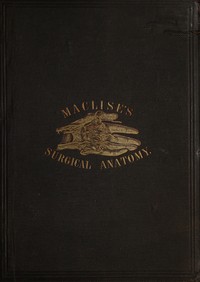
Surgical Anatomy by Joseph Maclise
Let's be clear from the start: this is not a novel. If you're looking for a storyline with characters and dialogue, you won't find it here. Instead, 'Surgical Anatomy' is a masterclass in visual science. Published in the 1850s, it's a collection of large, stunningly detailed lithographic plates. Each plate is a full-color dissection of a specific region of the body—the shoulder, the abdomen, the hand—layer by layer, like the most precise biological onion you've ever seen. Maclise didn't just show the final picture; he walked the surgeon-viewer through each step of uncovering muscle, nerve, and bone.
The Story
The 'plot' is the silent, urgent mission behind every illustration. Joseph Maclise was a surgeon himself, working in an era before germ theory, before safe anesthesia, and before reliable blood transfusions. Surgery was fast, agonizing, and incredibly dangerous. His goal was to create the most accurate visual guide possible so that surgeons could operate with speed and accuracy, minimizing the patient's suffering and improving their slim chances of survival. Each plate is a silent argument for careful, informed practice over blind hacking.
Why You Should Read It
I picked this up out of historical curiosity and was completely captivated. The artistry is extraordinary—the delicate shading of a nerve plexus, the vivid red of arterial blood against pale muscle. But what really gets you is the context. Staring at these beautiful, orderly maps while knowing the chaotic, horrific reality of a mid-1800s amputation creates a powerful and sobering tension. It humanizes the frantic quest for knowledge that defines medical history. You're not just looking at body parts; you're witnessing a desperate tool for saving lives, frozen in ink and color.
Final Verdict
This book is a niche gem, but a brilliant one. It's perfect for history buffs fascinated by medicine, for artists or illustrators in awe of technical skill, or for anyone in the medical field who wants a profound connection to their profession's gritty origins. It's not a casual read; it's an experience. You don't browse it—you study it, and in doing so, you gain a deep respect for the painful, beautiful foundation upon which modern surgery was built. Keep it on your coffee table, and I guarantee it'll start conversations far more interesting than any standard art book.
This text is dedicated to the public domain. It is now common property for all to enjoy.
George Lee
1 month agoLooking at the bibliography alone, the author doesn't just scratch the surface but goes into meaningful detail. A trustworthy resource that I'll keep in my digital library.
James Gonzalez
1 year agoI appreciate how this edition approaches the core problem, the step-by-step breakdown of the methodology is extremely helpful for students. This is a solid reference for both beginners and experts.
Joseph Brown
10 months agoA must-have for graduate-level students in this discipline.
Joseph Davis
2 months agoI found the author's tone to be very professional yet accessible, the way it handles controversial points with balance is quite professional. The price-to-value ratio here is simply unbeatable.









Kimberly Garcia
11 months agoAs a professional in this niche, the visual layout and supporting data make the reading experience very smooth. Finally, a source that prioritizes accuracy over hype.